|
|
Diplomacy
Interview with Youssef Iguider on the Anniversary of the Green March
Tuesday, November 25, 2025
PanOrient News
TOKYO: Youssef Iguider says the Green March was “one of the most brilliant and unifying moments in Morocco’s modern history.” In an interview with PanOrient News in November marking the 50thanniversary of the March, he
said it symbolized the unity of Morocco with its southern Saharan provinces, revived a sense of unity within the country and allowed the Sahara region to flourish.
Iguider has been living, studying and working in Japan since 1989. With over three decades of experience bridging Japan, Silicon Valley and the global technology ecosystem, he is recognized as a leading figure in innovation-driven collaboration between the US and Japan. He is currently Vice-President of Business Development and Japan Country Managing Director at SRI International (formerly Stanford Research Institute).
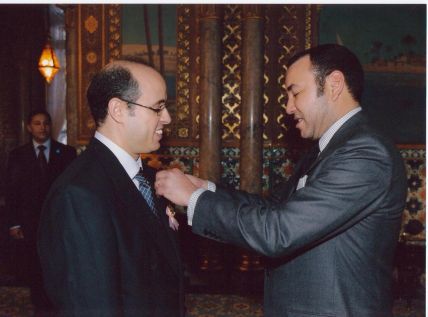
Iguider has founded and led several initiatives to strengthen Morocco-Japan and US-Japan relations. In recognition of his contributions to fostering international cooperation and innovation, King Mohammed VI personally decorated Iguider with the Royal Order of the Throne in Tokyo in 2005.
Our interview started with his recollections of the Green March.
Q/ How do you remember the Green March?
A/ This year, 2025, Morocco celebrates the 50th anniversary of the Green March. For me, this commemoration is also a deeply personal memory, etched in my mind since my middle school days. For Moroccans, the Green March stands
as a timeless symbol of national unity and peaceful determination.
After regaining independence over the main part of Morocco in 1956, our nation embarked on a gradual and peaceful process of territorial recovery: Tarfaya in 1958, then Sidi Ifni in 1969, and ultimately the Saguia el-Hamra and Oued
Ed-Dahab provinces in 1975. On October 16, 1975, the International Court of Justice recognized the existence of legal and historical ties of allegiance between the Sahara and the Moroccan Sultan, dismissing any notion that the land
had been terra nullius.
In response, His Majesty King Hassan II called upon the Moroccan people to participate in a peaceful March to reclaim their southern provinces. I still remember the emotion of those days, the sense of pride that filled every home, the
thousands of citizens who rushed to volunteer, hoping to be among the chosen 350,000.
The Green March, launched on November 6, 1975. Within weeks, Spain signed the Madrid Accords, agreeing to withdraw and transfer administrative control of the Sahara. The Green March thus became a unique example in world
history of a nation reclaiming its territory through peaceful means without a single shot fired.
Q/ How do the Moroccan people feel about the March now and how was the March necessary to achieve the reunion of Sahara with its motherland, Morocco, after independence.
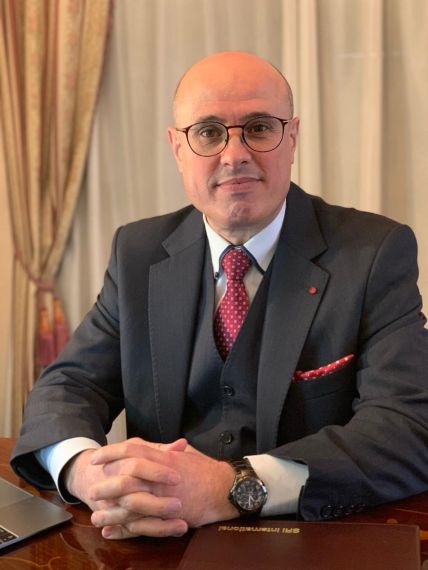 Youssef Iguider
A/ Looking back from today’s perspective, the Green March of 1975 stands as one of the most brilliant and unifying moments in Morocco’s modern history. A truly genius idea born of the vision and wisdom of His late Majesty King
Hassan II.
At a time when the future of the Moroccan Sahara remained uncertain, King Hassan II found a way to transform a potentially dangerous geopolitical crisis into a peaceful act of unity and faith. Rather than resorting to war or confrontation, he chose to mobilize the Moroccan people around a peaceful March. A symbolic and spiritual reclaiming of the land that had always been part of Morocco’s history and identity.
The Green March did far more than achieve a political goal. It reunited Moroccans from the southern provinces with their fellow citizens from the central and northern provinces of Morocco. It revived a profound sense of solidarity, bringing together the Moroccan nation around its King and reinforcing the sacred bond between the Throne and the people.
Today, 50 years later, the Green March remains alive in the heart of every Moroccan, at home and abroad. It is a reminder that true strength lies not in conflict, but in unity, vision, and peace. These are values that continue to guide Morocco’s journey under the leadership of His Majesty King Mohammed VI.
Q/ Will there be any celebration of the March on its anniversary?
A/ Every year, on November 6, Moroccans at home and abroad celebrate this momentous day with immense pride, honoring the spirit of patriotism, solidarity and determination that brought together an entire nation.
As part of the Moroccan community in Japan, my family and I, like all Moroccans around the world, commemorate this day each year with deep emotion and joy. But this year’s celebration is truly special, as it carries a unique and historic meaning.
First, 2025 marks the 50th anniversary of the Green March, a golden jubilee of a peaceful and visionary act that changed the course of our nation’s history. Second, and perhaps even more significantly, on October 31, the United
Nations Security Council adopted a resolution recognizing Morocco’s Autonomy Plan as the main reference point in the search for a lasting solution to the Sahara issue, a conflict that has long burdened the geopolitics of the Maghreb
region.
Across all Moroccan cities, jubilant crowds took to the streets to celebrate this moment. People danced, waved flags, and sang patriotic songs and the national anthem. In the southern provinces, residents lit up the skies with fireworks, singing and dancing to the rhythms of traditional music.
In his televised address, His Majesty King Mohammed VI hailed the UN Security Council’s decision as a “historic turning point.” His words resonated deeply, reinforcing our collective pride and faith in Morocco’s just cause.
Even from far away in Japan, we could feel the same heartbeat of the nation, one of unity, peace and unwavering love for our homeland.
Q/ What is the current situation in the Sahara and its population regarding being part of Morocco after it gained its independence from Spain?
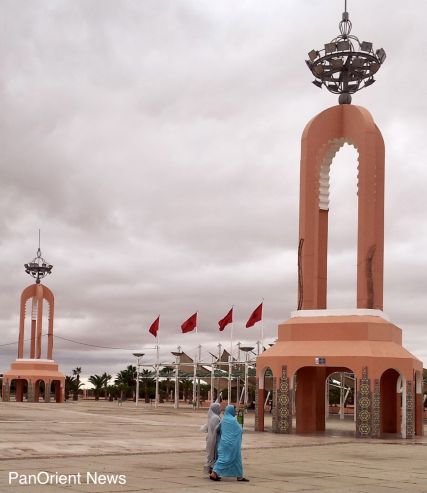
A/ In fact, Morocco did not wait for the United Nations Security Council’s recent recognition of the Autonomy Plan to take action. Long before this acknowledgment, Morocco had already begun implementing the plan on the ground, ensuring tangible benefits for the local citizens of the region.
Under this framework, Moroccan Sahrawi citizens currently manage their own affairs democratically through legislative, executive and judicial bodies, reflecting Morocco’s commitment to genuine self-governance within its sovereignty.
Since the early 2000s, the southern provinces have experienced strong and sustained economic growth, with an annual rate well above the national average. Under the leadership of His Majesty King Mohammed VI, Morocco has strengthened both its diplomacy and its development efforts on the ground. Today, the southern provinces are witnessing an unprecedented transformation: modern roads, industrial and logistics zones, renewable energy projects, universities, hospitals, social infrastructure and the strategic Dakhla Atlantic Port. This dynamic progress, driven by the 2015 Development Model for the Southern Provinces, has turned the Moroccan Sahara into a regional hub of investment, stability and prosperity – a true embodiment of sovereignty through action.
Q/ What are the main challenges facing Morocco and the Sahara region in terms of national security?
A/ Morocco’s national security landscape is shaped by the strategic importance of its southern provinces and the complex dynamics of the wider Sahel region. While Morocco has maintained stability and economic progress under the leadership of His Majesty King Mohammed VI, several persistent challenges continue to require careful attention and proactive strategy.
One of the main security concerns stems from regional instability in the Sahel, where terrorist groups, arms traffickers and criminal networks operate across porous borders. Although Morocco remains insulated from direct threats, the
risk of spillover from this volatile area calls for continued vigilance and robust border control. In addition, border management and smuggling pose operational challenges across the vast desert terrain. Controlling irregular migration, illicit trade and potential infiltration requires sustained coordination between military, security and
intelligence units. Emerging threats also include cyberattacks and disinformation warfare, particularly aimed at undermining Morocco’s territorial integrity narrative.
To address these risks, Morocco has adopted a comprehensive and forward-looking approach, combining security, development and diplomacy.
Q/ How is the Sahara region contributing to the advancement of Morocco’s economy, tourism, industry and agriculture/ fisheries?
A/ I personally take great pride in witnessing how our southern provinces have become a powerful engine for Morocco’s economic and regional development. In his 2019 speech commemorating the 44th anniversary of the Green March,
His Majesty King Mohammed VI reaffirmed his vision to make Morocco a key player in shaping the future of Africa, emphasizing that “Morocco’s southern provinces constitute a real link between Morocco and the rest of Africa, geographically, humanly, and economically.”
Today, this vision is taking shape. Morocco is actively transforming its southern provinces, particularly Dakhla and Laayoune, into vibrant centers of growth that connect Morocco with the broader African continent. The most emblematic project of this transformation is the Dakhla Atlantic Port, a cornerstone of Morocco’s strategy to position the Sahara as an economic, industrial and maritime hub.
This state-of-the-art port includes an industrial logistics zone, a commercial exchange area and a dedicated fisheries zone to boost the region’s rich maritime resources. Combined with infrastructure development, tourism promotion, renewable energy projects and agricultural investments, these initiatives are turning the southern provinces into a
strategic bridge between Morocco, Africa and the world.
The Sahara today is not only a symbol of Morocco’s unity, but also a driving force for innovation, trade, and sustainable growth across the continent.
Q/ What does the Green March mean to you today?
A/ As a Moroccan living in Japan for many years, I have always carried the Green March and its meaning deep within my heart. It reminds me that Morocco’s greatest strength lies in its unity, its faith and its unwavering commitment to peace and progress. Fifty years on, the same spirit that guided our fathers and mothers in 1975 continues to inspire us today to work, innovate and represent our beloved country with pride wherever we are in the world. The Green March was not only a moment in history, but it is also a living legacy that continues to guide Morocco’s journey toward a future of stability, prosperity and leadership across Africa and beyond.(PanOrient News)
© PanOrient News All Rights Reserved.
|
|